Quick Answer: What Is Sarson Da Saag and Makki Di Roti?
Sarson da saag is a slow-cooked Punjabi curry of mustard greens, usually mixed with spinach and bathua. Makki di roti is a flatbread made from maize flour. Together they are Punjab's best-known winter meal.
Main ingredients: Mustard greens (sarson), spinach (palak), bathua, maize flour (makki ka atta), ginger, garlic and green chillies
When it's eaten: In winter, when mustard greens are in season, and especially around Lohri in January
How it's served: Hot, with white butter or ghee, a piece of jaggery and often a glass of lassi
Taste: Earthy, slightly bitter, peppery and rich, with a sweet, nutty roti on the side
Also called: Sarson ka saag and makki ki roti (Hindi), or sarson saag
What Is Sarson Da Saag?
Sarson da saag is a thick, creamy curry made by slow-cooking mustard greens with other leafy greens and then mashing them. "Sarson" means mustard and "saag" means greens.
In Punjabi, "da" means "of", so the name simply means "greens of mustard". In Hindi you will hear it called sarson ka saag.
The dish is more than just mustard leaves. Most recipes mix in other greens to balance the sharp, bitter taste of sarson. NDTV Food's classic recipe uses mustard greens with palak (spinach) and bathua.
Other recipes, like one shared by Times Now, add radish leaves and fenugreek (methi) too.
After cooking, the greens are mashed, thickened with a little maize flour and finished with a tadka of ghee, onion, ginger, garlic and spices.
What Is Makki Di Roti?
Makki di roti is a flatbread made from maize flour (makki ka atta), cooked on a tawa and usually finished with ghee or butter. It is thicker and more crumbly than a wheat roti.
Maize flour has no gluten to hold the dough together. That makes it tricky to roll. A 2000 piece in The Tribune notes that makki atta is "less starchy, hence difficult to knead".
That is why many home cooks pat the dough by hand or press it between two sheets of plastic or parchment. The Tribune describes village women shaping the rotis by "flapping their hands".
Some cooks add grated radish or fenugreek leaves to the dough for extra flavour.
Why Is Sarson Da Saag a Winter Dish?
Sarson da saag is a winter dish because mustard is a winter (rabi) crop in Punjab. The fresh greens are at their best in the cold months, which is when Punjabi kitchens make it.
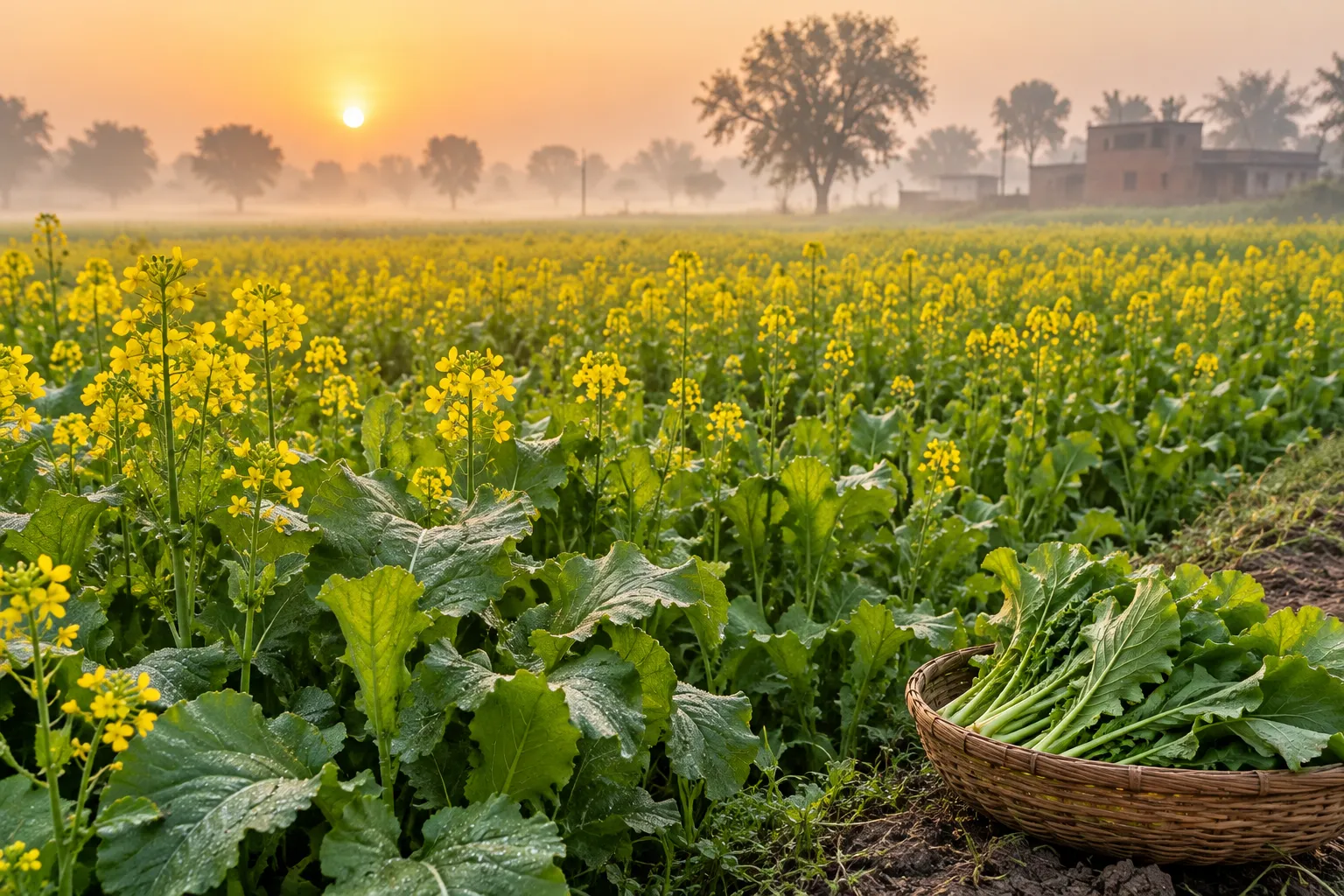
In Punjab, rabi crops are sown around October and harvested around March or April. By mid-winter, mustard fields are in full leaf and the greens are plentiful.
The Tribune puts it simply: "Come winters and every Punjabi waits for sarson da saag and makki di roti."
Sarson da saag is also rich and warming. With white butter, ghee and jaggery, it is filling food for cold north Indian winters.
The Lohri Connection
Sarson da saag and makki di roti are a traditional part of the Lohri feast. Lohri is Punjab's winter harvest festival, celebrated every year on 13 January.
NDTV Food notes that the Lohri feast is built around winter produce like radish, mustard greens, groundnuts and sugarcane. Makki ki roti and sarson ka saag, served with homemade butter, are among its signature dishes.
Families light a bonfire and toss in popcorn, peanuts, rewari and gajak. The evening often ends with this famous combination at the dinner table.
What Is the Story Behind This Dish?
Leafy mustard greens have a long history in India, but maize is a much later arrival. The pairing as we know it is newer than many people think.
According to reports in GNT (India Today Group) and News18, mustard greens find mention in old Indian texts. These include the Acharanga Sutra and the Sushruta Samhita.
Maize, however, is not native to India. Those same reports say it is believed to have arrived around the 16th century, roughly 400 years ago.
Some food writers suggest the combination grew in popularity around the time of Partition. However, this is not well documented, and how it became Punjab's signature dish is not fully clear.
What is clear is its place in Punjabi life. The Tribune notes it is also served at weddings as a delicacy. Today it has moved from village kitchens to restaurant menus across India and abroad.
What Does Sarson Da Saag Taste Like?
Sarson da saag tastes earthy, slightly bitter and peppery, with a rich, buttery finish. The mustard greens give a sharp bite that spinach and bathua soften.
The texture is thick and coarse rather than silky smooth. Ginger, garlic and green chillies add heat and freshness.
Makki di roti brings a sweet, nutty, corn flavour and a slightly crisp, crumbly bite. A dollop of white butter melting on top pulls everything together.
The jaggery served with sarson da saag is the final touch. A small bite of sweet gur between mouthfuls balances the bitterness of the greens.
How Is Sarson Da Saag and Makki Di Roti Served?
It is served hot, with a generous dollop of white butter (makkhan) or ghee, jaggery on the side and often a glass of lassi. Raw onion or radish is a common extra.
Here is a typical plate:
Sarson da saag: In a bowl, topped with white butter or ghee
Makki di roti: Hot off the tawa, smeared with butter or ghee
Jaggery (gur or shakkar): A small piece to eat alongside
Lassi: A tall glass of chilled buttermilk-style yoghurt drink
Extras: Sliced raw onion, radish, green chillies or pickle
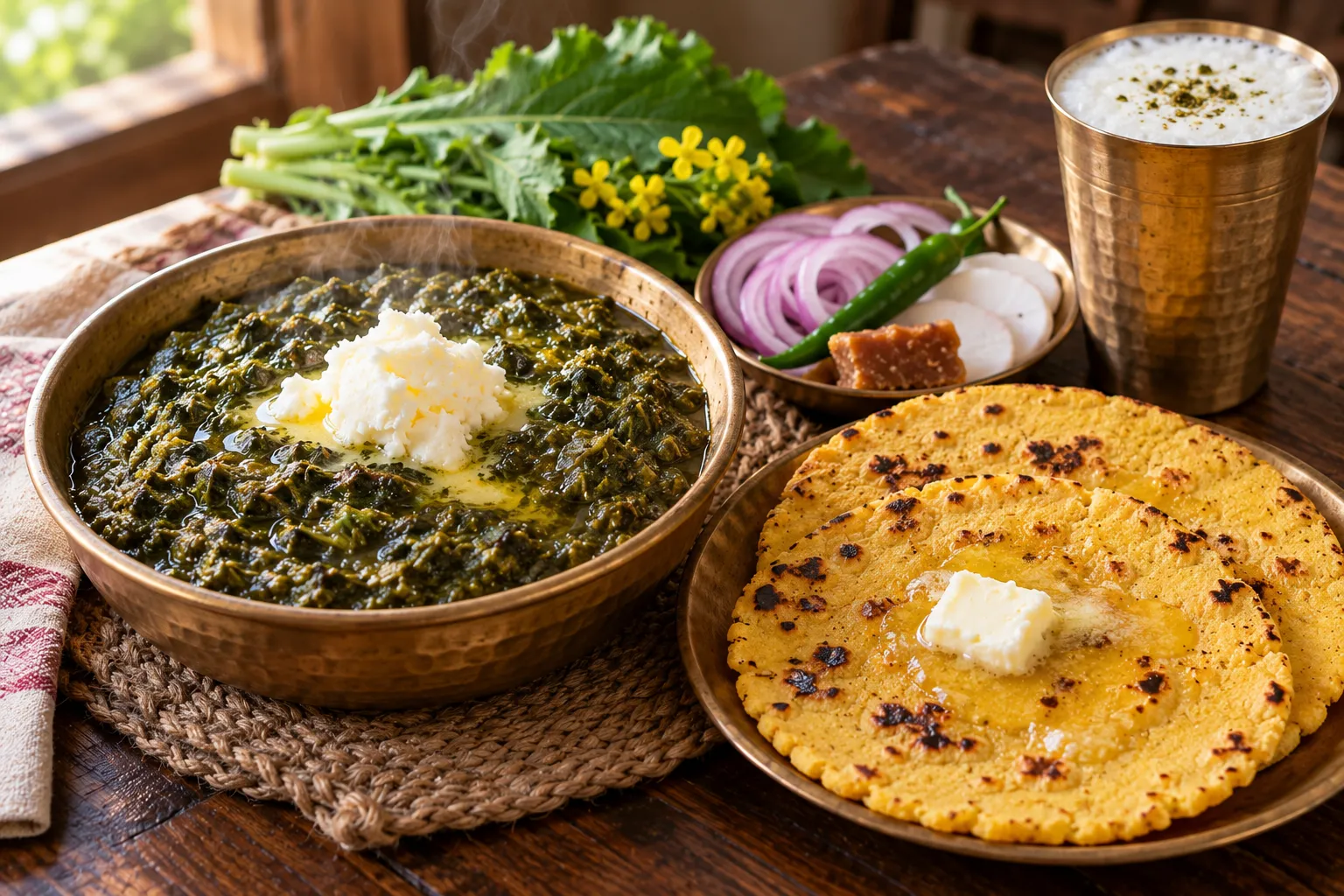
The Tribune quotes one Ludhiana resident who described the full spread with lassi as "the most wholesome food in the world".
How Do You Make Sarson Da Saag at Home?
At home, you cook the mixed greens until soft, mash or blend them coarsely, thicken with maize flour and finish with a ghee tadka. The roti is made by kneading maize flour with warm water.
This is a simple method based on recipes from NDTV Food, Times Now and ETV Bharat. Quantities are a guide only.
Ingredients for the Saag
2 bunches mustard greens (sarson)
1 bunch spinach (palak)
½ bunch bathua (optional)
1 inch ginger, 4–5 garlic cloves, 2 green chillies
2 tablespoons maize flour (makki ka atta)
Salt to taste
For the tadka: ghee or mustard oil, 1 chopped onion, a little garlic and ginger, a pinch of asafoetida
Method for the Saag
Wash the greens well and chop roughly, removing thick stems.
Pressure cook the greens with ginger, garlic, chillies, salt and a little water until very soft.
Mash or blend to a coarse paste. Do not make it too smooth.
Stir in the maize flour and simmer gently, stirring often, until thick.
Heat ghee, add asafoetida and onion, then fry until golden. Pour over the saag.
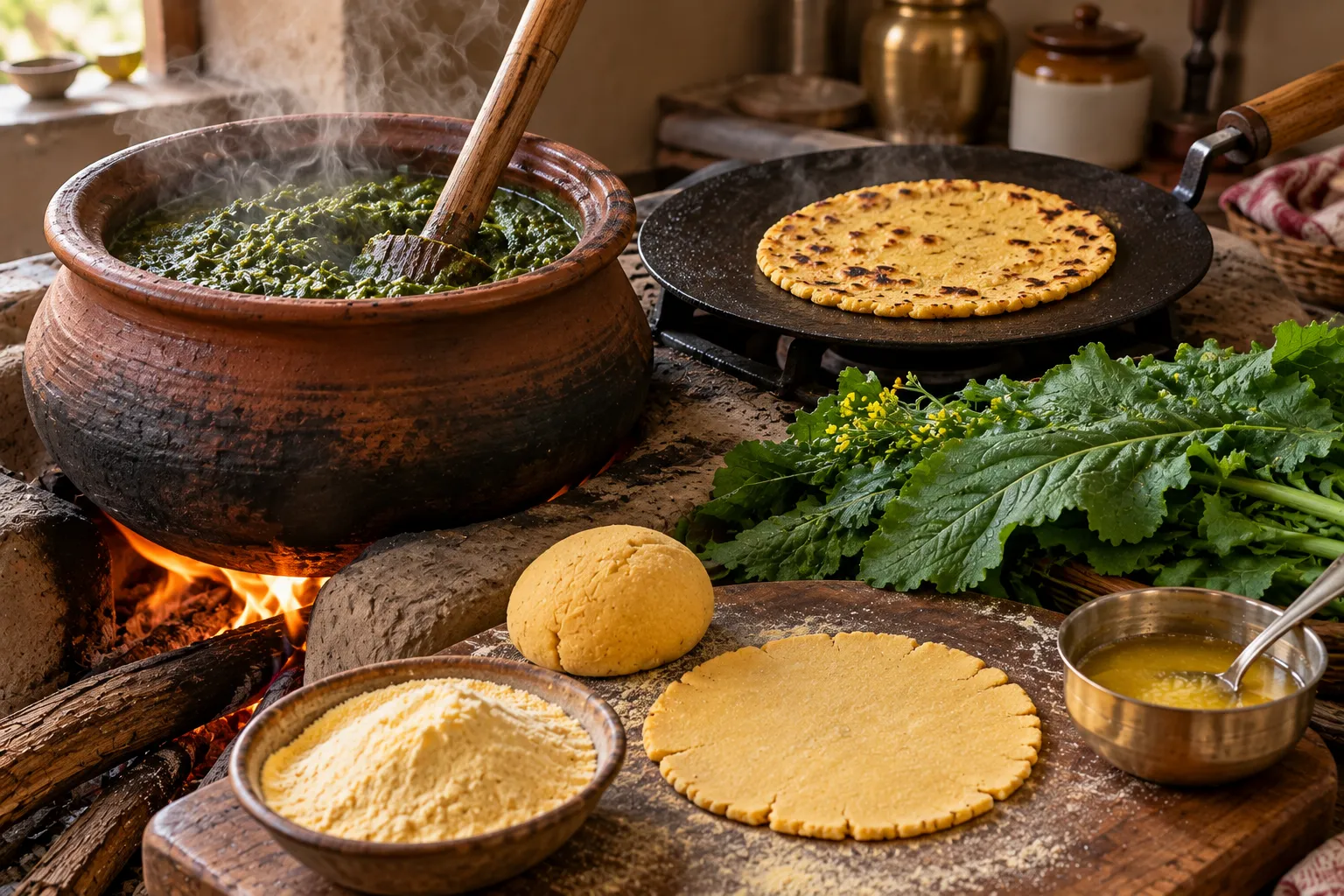
Traditionally, the saag is slow-cooked for a long time. The Tribune describes villages cooking it in an earthen pot over a slow fire, then mashing it with a wooden masher called a madhani.
Method for Makki Di Roti
Knead maize flour with warm water and a pinch of salt into a soft dough. Some cooks add ajwain.
Take a ball and pat it flat between your palms, or press it between two sheets.
Cook on a hot tawa until golden spots appear on both sides.
Smear with ghee or butter and serve straight away.
Make the roti only once your sarson da saag is ready, and knead small batches at a time. Maize dough dries out and cracks quickly.
Is Sarson Da Saag Healthy?
Mustard greens are rich in several nutrients, especially vitamins K and C. But how healthy the full meal is depends a lot on how much butter and ghee you add.
According to nutrition data based on USDA figures, a 112 g serving of raw mustard greens provides:
About 240% of the daily value for vitamin K
About 87% of the daily value for vitamin C
About 19% of the daily value for vitamin A
3.6 g of fibre, for around 30 calories
Cooking the greens for sarson da saag reduces the volume of the greens a lot, and some vitamin C may be lost to heat. Also, the generous butter, ghee and jaggery add calories and fat.
Maize is naturally gluten-free. If you avoid gluten for medical reasons, check that your maize flour has not been processed alongside wheat.
People taking blood-thinning medicines like warfarin are often advised to keep their vitamin K intake steady. If that applies to you, check with your doctor before eating a lot of leafy greens.
Where Can You Try Sarson Da Saag in Bengaluru?
Several North Indian restaurants in Bengaluru serve it and makki di roti, often as a winter special. Because it is seasonal, always call ahead or check the menu before you go.
These are real places that recent listings or reviews link to the dish:
Dhaba Estd 1986, Indiranagar: Reviews on Yappe.in mention a winter special menu with sarson ka saag and makki ki roti
SWAAD, 14th Main Road (560086): A small North Indian eatery where a December 2025 Google review praised its sarson ka saag with makki di roti
Kapoor's Cafe, Jayanagar 3rd Block: Featured in a Curly Tales list of places to get the dish in Bangalore
Purani Dilli by Anand Sweets, Commercial Street: Also featured in the Curly Tales list
Punjab Grill, Forum Rex Mall, Brigade Road: Also featured in the Curly Tales list
Restaurant menus, timings and addresses change, so please confirm before visiting. You can also search "sarson da saag near me" on a food app during winter to find options close to you.
If you love Punjabi comfort food, you might also enjoy our look at what makes rajma chawal special, another North Indian favourite.
Frequently Asked Questions
What is sarson da saag made of?
It is mainly mustard greens, usually mixed with spinach and bathua, cooked with ginger, garlic and chillies, thickened with maize flour and finished with ghee.
What is the difference between sarson da saag and sarson ka saag?
There is no difference in the dish. "Da" is Punjabi and "ka" is Hindi; both mean "of".
Why is sarson da saag eaten with makki di roti?
Both are traditional Punjabi winter foods. The sweet, crumbly maize roti balances the bitter, rich greens.
Why is sarson da saag eaten in winter?
Mustard is a winter (rabi) crop in Punjab, so the greens are freshest then. It is also a traditional Lohri dish.
What is served with sarson da saag?
White butter or ghee, jaggery, lassi, and often raw onion or radish.
Is makki di roti gluten-free?
Maize flour is naturally gluten-free, but check the packet for cross-contamination with wheat if you need to avoid gluten strictly.
Why does my makki di roti break?
Maize flour has no gluten, so the dough cracks easily. Knead with warm water, make small batches and pat it between sheets.
Where can I eat sarson da saag in Bengaluru?
North Indian spots like Dhaba Estd 1986 in Indiranagar, Kapoor's Cafe in Jayanagar and Punjab Grill on Brigade Road have been linked to it. Call ahead, as it is seasonal.